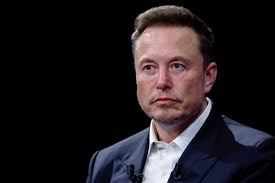
Elon Musk Unveils Major AI Expansion Plans as Global Technology Race Accelerates
Billionaire entrepreneur says artificial intelligence infrastructure will define the next era of economic power
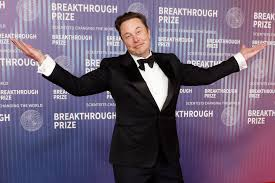
Elon Musk has announced a sweeping expansion of his artificial intelligence operations as competition between global technology firms intensifies in what analysts are increasingly calling the most important technology race of the century.
Speaking before investors, engineers, and business leaders at a major technology summit in Austin, Texas, Musk outlined plans for new AI infrastructure projects designed to support increasingly advanced machine learning systems and large-scale computational models.
The billionaire entrepreneur described artificial intelligence as "the defining technology of modern civilisation," warning that nations and corporations failing to invest aggressively in AI infrastructure risk falling behind economically over the next decade.
"Artificial intelligence will affect every industry," Musk told attendees during the event. "Transportation, healthcare, manufacturing, education, finance — all of it changes. The question is who builds the infrastructure first and who builds it best."
Growing Demand for AI Infrastructure
Industry analysts say the announcement reflects a rapidly escalating battle among major technology companies to secure computing power, semiconductor access, engineering talent, and energy resources needed to develop next-generation AI systems.
Over the past two years, global investment into AI infrastructure has surged dramatically as businesses increasingly integrate machine learning tools into their operations.
The systems powering advanced AI models require enormous computational resources, often involving tens of thousands of high-performance graphics processing units (GPUs) operating simultaneously inside highly specialised data centres.
According to industry estimates, a single cutting-edge AI training cluster can cost billions of pounds to develop and maintain.
"The scale of spending happening right now is extraordinary," said Daniel Mercer, a senior technology analyst at a London-based research consultancy. "We are seeing infrastructure investment levels comparable to the early internet era or the rise of cloud computing."
Musk's latest plans reportedly include:
- New AI-focused data centres
- Expanded cloud computing infrastructure
- Semiconductor partnerships
- Increased energy generation capacity
- Recruitment drives targeting AI engineers
- Advanced cooling systems for large-scale computing environments
Technology insiders believe several facilities may eventually support autonomous systems, robotics development, and large-scale AI research operations.
Competition Between Global Technology Giants
The global race to dominate artificial intelligence has intensified sharply throughout 2025 and 2026.
Major technology firms across the United States, China, Europe, and the Middle East have collectively committed hundreds of billions of pounds toward AI research and infrastructure projects.
Companies are increasingly competing for computing power, semiconductor supply chains, AI researchers, proprietary data systems, energy infrastructure, and cloud dominance.
Experts believe the next decade may determine which nations and corporations emerge as leaders in the AI-driven global economy.
"This is no longer simply a software industry story," Mercer explained. "Artificial intelligence has become an infrastructure battle involving energy, chips, networking, logistics, and industrial-scale computing."
Governments have also become increasingly involved in AI development due to growing concerns surrounding national security, economic competitiveness, and technological sovereignty. Several countries have already announced major state-backed AI investment programmes aimed at accelerating domestic innovation and reducing dependence on foreign technology providers.
Musk's Longstanding Focus on Artificial Intelligence
Musk has remained one of the technology sector's most outspoken figures regarding both the opportunities and risks associated with artificial intelligence.
Over the past decade, he has repeatedly warned about the long-term implications of uncontrolled AI development while simultaneously investing heavily in companies connected to automation, robotics, autonomous systems, and machine learning.
His public comments on AI safety have often generated significant debate within the technology community. Some researchers support Musk's calls for stronger oversight and international regulation, while others argue excessive regulation could slow innovation and allow rival nations to gain strategic advantages.
Despite those concerns, Musk has continued expanding his involvement in AI-focused ventures, describing the technology as inevitable and transformative.
"Whether people are ready or not, AI adoption is accelerating," said one Silicon Valley investor attending the summit. "Every major company now understands this technology could completely redefine competitive advantage."
AI's Impact on the Global Economy
Businesses worldwide are already integrating AI systems into areas including financial analysis, customer service, software development, logistics optimisation, healthcare diagnostics, advertising, cybersecurity, and media production.
The rapid adoption of AI tools has sparked both optimism and concern among economists and policymakers. Supporters argue artificial intelligence could dramatically improve productivity, reduce operational inefficiencies, and accelerate scientific breakthroughs across multiple sectors.
Critics, however, warn the technology could disrupt millions of traditional jobs while increasing concerns surrounding misinformation, surveillance, and corporate concentration of power.
Recent reports suggest AI adoption rates among large corporations have increased substantially over the past 18 months as firms attempt to remain competitive in rapidly changing markets.
"Businesses now fear being left behind," Mercer said. "There's enormous pressure to integrate AI into operations because competitors are doing the same."
The Energy Challenge Behind AI Growth
One of the largest challenges facing the AI industry remains energy consumption. Large-scale AI systems require massive amounts of electricity, prompting growing discussions around sustainable energy generation, grid infrastructure, and environmental impact.
Technology firms are increasingly exploring nuclear energy partnerships, solar infrastructure, battery storage systems, advanced cooling technologies, and more efficient chip architecture.
Analysts believe energy availability may become one of the biggest limiting factors for future AI expansion.
"AI infrastructure is incredibly power-intensive," explained energy consultant Rachel Holloway. "The companies that secure stable long-term energy access will have a significant advantage."
Looking Ahead
Despite growing concerns surrounding regulation, ethics, and economic disruption, investor confidence in artificial intelligence remains exceptionally strong.
Technology markets continue rewarding companies linked to AI infrastructure, semiconductors, cloud computing, and automation. Many analysts believe the technology's long-term impact could eventually rival the industrial revolution or the rise of the internet itself.
For Musk, whose business empire already spans automotive technology, aerospace, robotics, and AI, the latest expansion plans further reinforce his position at the centre of one of the world's fastest-growing industries.
"The next decade will likely determine the future balance of technological power globally," Mercer said. "Artificial intelligence is no longer optional infrastructure. It's becoming foundational to modern economies."
Read More
Related topics